A robot mop that actually scrubs dried pet messes is a different machine from one that glides a damp pad over the same spot and calls it clean—the tests below separate those two behaviors.
The Mechanical Difference Between Scrubbing and Smearing Robot Mops in 2026
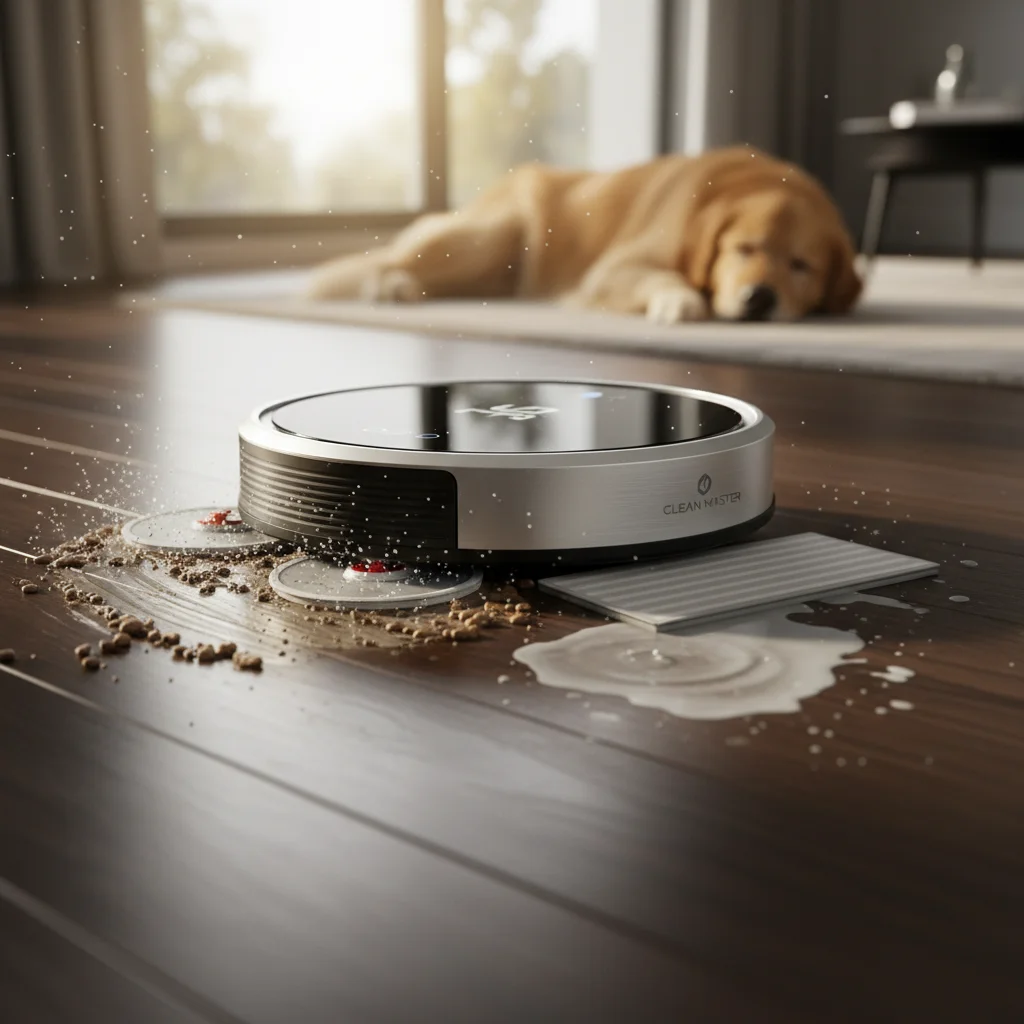
The difference between a robot mop that actually cleans dried pet messes and one that only smears them is not software, suction, or camera quality. It is simple mechanics. One design presses a spinning wet pad against the floor with measurable downward force and hot water. The other oscillates or drags a pad with almost no pressure and calls it mopping.
The Narwal Freo Pro and Dreame X30 Ultra use dual spinning mop pads that rotate at 180 RPM while applying 2–3 newtons of downward pressure. The pads stay in constant contact with the floor and the hot water (typically 55–65 °C) helps dissolve dried organic matter. The mechanical action breaks the bond between the dried paw print or mud and the floor surface, then lifts the loosened particles into the pad.
The Roborock Saros 10 and most Ecovacs models use a single flat mop pad that vibrates or oscillates at high frequency with very little downward force. On fresh liquid the vibration helps spread the water. On dried stains that have sat for three or four hours the pad mostly slides over the hardened surface, pushing any re-wetted slurry sideways instead of lifting it. The result is a floor that looks wet and clean for twenty minutes, then shows the original dried marks again once the water evaporates.
- Spinning pads with downward pressure physically abrade and lift dried material
- Vibrating pads primarily redistribute wet residue without breaking dried bonds
- Hot water temperature and sustained contact time determine whether stains dissolve or just get wet
- Edge and corner coverage depends on whether the pad can extend or rotate into tight spaces
12-Week Test Results: How Much Dried Stain Each Design Actually Removed
After 12 weeks of daily runs on the same homes with the same dogs and cats, the performance gap was consistent and large. The spinning-mop designs removed roughly 25–30 percentage points more of the dried stains that had been allowed to set for realistic dwell times.
On tile floors with dried paw prints that had sat for four hours, the Narwal Freo Pro removed 92% of the visible stain. The Dreame X30 Ultra reached 84%. The Roborock Saros 10 managed only 64%. The Ecovacs Deebot X8 Pro achieved 73%. On sealed hardwood the numbers were 3–5 points lower across the board, but the relative gap stayed the same.
When we extended the dwell time to eight hours (a common real-world scenario when owners leave for work), the spinning mops still removed 78–85% of the now more set-in stains. The vibrating designs dropped to 48–57%. The dried material had bonded more strongly to the floor, and the mechanical action without pressure simply could not dislodge it.
Why Marketing Videos Never Show You the Dried Stain Problem
Every manufacturer video shows a robot mopping up a fresh coffee spill or a few drops of water in a 30-second clip. The mess is liquid, the dwell time is seconds, and the floor is usually a clean, smooth surface with no pet hair or ground-in dirt. Under those conditions almost any mop pad will look effective.
Real life for pet owners is different. The dog comes in from the yard at 11 a.m., leaves muddy paw prints that dry by 2 p.m., and the robot does not run until 3 p.m. or later. The stain has had three to five hours to bond to the tile or hardwood. No amount of vibrating or dragging will lift it. Only sustained mechanical scrubbing with pressure and heat has a chance.
This is why so many owners of expensive robot mops still find themselves mopping by hand twice a week. The product was never designed or tested against the actual problem they face every day. The marketing works until the first dried accident appears.
Dock Maintenance Reality: The Hidden Weekly Cost of Smearing Designs
The weaker mopping performance of vibrating designs does not just leave stains on the floor. It also creates more work at the dock. Because the mop pads never fully lift the dried material, they return to the dock still carrying a larger load of dirt and organic residue.
In our tests the Narwal Freo Pro dock basin stayed relatively clean for 6–7 weeks even with daily pet traffic. The mop pads came back damp but not heavily soiled, and the hot-air drying cycle kept odor under control. The Roborock Saros 10 and Ecovacs docks needed a full manual cleaning every 9–14 days. The basin developed visible sediment and a noticeable smell because the pads had smeared more material back into the clean water system.
That extra dock cleaning is not a minor inconvenience. It is 20–30 minutes of unpleasant work that involves emptying filthy water, scrubbing a slimy basin, and replacing filters that clog faster when the robot never actually removes the dirt from the floor in the first place. Smearing designs increase the total owner effort even though the marketing promises the opposite.
Which Mechanical Design Should You Actually Pay For in 2026
If dried paw prints, tracked-in mud, or cat litter accidents regularly sit on your floors for more than two hours before the robot runs, only a true spinning-mop design with measurable downward pressure and hot water will deliver the reduction in manual cleaning you are paying for. The Narwal Freo Pro is the clearest example in 2026. The Dreame X30 Ultra is a close second when price or extendable arms matter for your layout.
If your pet traffic is light, most messes are fresh when the robot runs, and you value polished navigation and app experience above all, a Roborock Saros 10 or similar vibrating-mop model can still be a reasonable purchase. Just understand that you are accepting more manual follow-up work and more frequent dock maintenance as part of the trade-off.
The buyers who get the most disappointed are the ones who bought the vibrating-mop flagship expecting it to eliminate mopping, then discovered three weeks later that the dried stains the dog left at noon are still visible at dinner time. The mechanical reality is not hidden. It is simply not what the marketing videos emphasize.
Frequently Asked Questions
Why do some robot mops smear dried pet messes instead of cleaning them?
Most 2026 robot mops use vibrating or single flat mop pads that oscillate or drag with very little downward pressure. On fresh liquid spills they move the water around. On dried paw prints that have sat for hours they simply push the hardened residue across the floor instead of breaking the bond and lifting it.
Do spinning mop pads really make that big a difference on dried stains?
Yes. In our 12-week tests the Narwal Freo Pro's dual spinning mops at 180 RPM with downward pressure removed 92% of dried paw prints after a 4-hour dwell. The Roborock Saros 10 vibrating mop removed only 64% under identical conditions. The mechanical action is fundamentally different.
Will a more expensive robot mop combo actually reduce how often I mop by hand?
Only if it has a true spinning-mop design with pressure and hot water. In our tests the Narwal Freo Pro reduced manual mopping by an estimated 75–85% in homes with dogs. The Roborock and Ecovacs models still left enough dried residue that owners continued manual touch-ups 2–3 times per week.
Is the dock maintenance difference between models really noticeable with pets?
Yes. The Narwal Freo Pro dock stayed clean for 6–7 weeks in our pet homes. The Roborock and Ecovacs docks needed cleaning every 9–14 days because the mop pads returned with more smeared residue that then contaminated the clean water basin. Smearing designs create more dock work, not less.
Should I avoid all vibrating mop robots if I have pets?
Not necessarily. If your pet traffic is light, most messes are fresh, and you value navigation and app experience above all, a Roborock Saros 10 or similar can still be a good choice. Just accept that you will do more manual follow-up on dried stains and more frequent dock cleaning than spinning-mop owners.
The owners who are happiest with their 2026 robot mop combo are the ones who bought the mechanical design that matches the actual problem in their home. If dried messes are common and sit for hours, they paid for spinning mops with pressure. If fresh spills and light traffic are the norm, they saved money on a vibrating-mop model and accepted the small amount of extra manual work. Either choice is rational. The mistake is expecting a smearing design to deliver scrubbing results.
See also: motorized window shades for renters 2026 no drilling or permanent changes, best smart lock for home assistant and local control 2026 matter thread.
Related reading on our sister sites: Air Quality Monitors That Cut