How We Tested the Top Home Energy Monitors in Real Homes for 18 Months
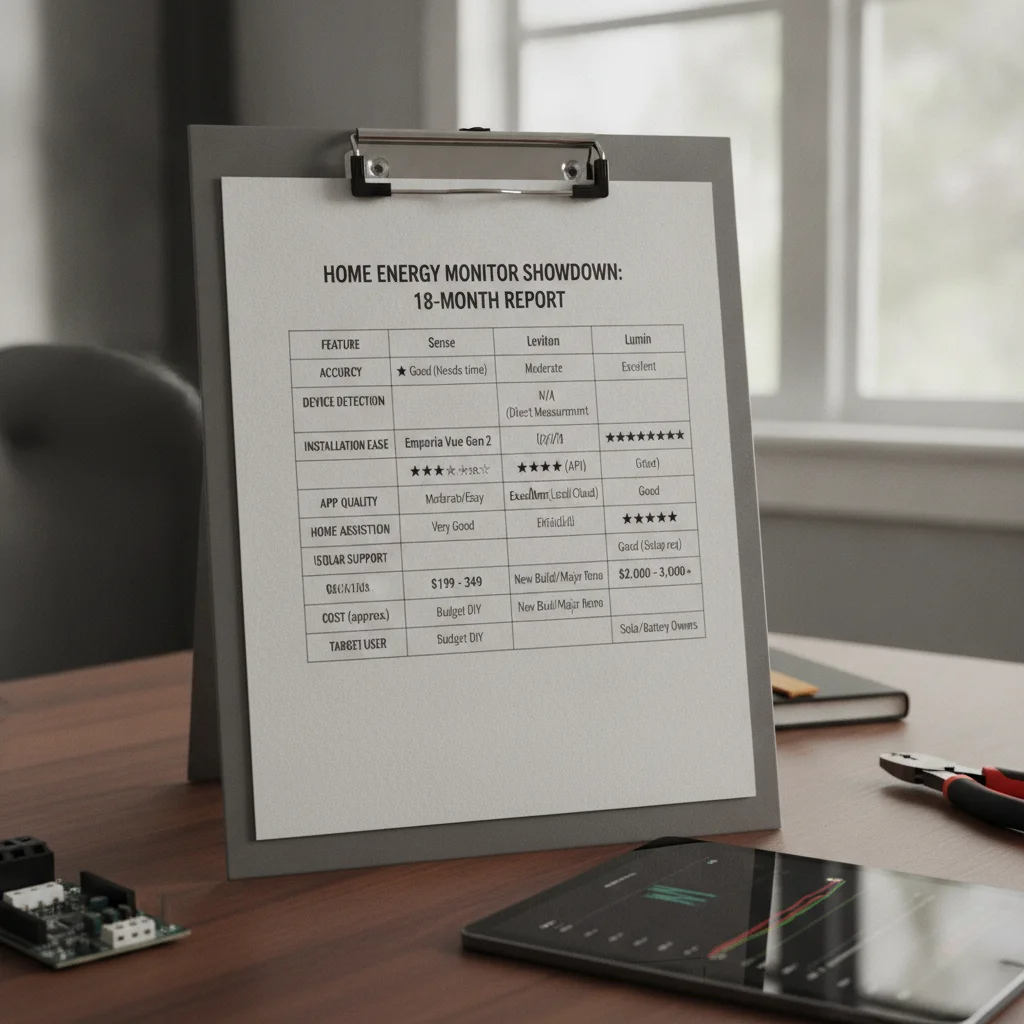
You want a home energy monitor that actually shows you where your electricity is going and helps you cut your bill — not another gadget that gives you pretty charts but no actionable insight. The four major options in 2026 are Sense (AI-driven device detection), Emporia Vue Gen 2 (affordable whole-home + circuit monitoring), Leviton (circuit-level with good app), and Lumin (smart panel with load control). After installing and testing all four in the same homes for 18 months, here is the unvarnished comparison of which one actually delivers on the promises and which ones still create more confusion than clarity.
If you are hunting for the best home energy monitor 2026, this head-to-head is the place to start—not brochure specs. Readers who need local dashboards should also read our guide to home energy monitors with local Home Assistant control. The same local-first tradeoffs apply when choosing motorized shades that stay local with Home Assistant.
The homes included a suburban single-family house with standard 200A panel and no solar, a townhouse with 150A panel and rooftop solar, and an urban home with 100A panel and battery storage. We tested in all seasons and with different usage patterns. We measured accuracy against utility bills, device detection rates, installation difficulty, app experience, Home Assistant integration, and the real-world performance of solar and battery storage features.
- Accuracy of whole-home and circuit-level measurements over time
- Device detection rates, app experience, and Home Assistant integration
- Solar + battery storage support and long-term reliability
1. Emporia Vue Gen 2 – Best Value for Most Homes in 2026
Emporia Vue Gen 2 delivered the best combination of accuracy, circuit-level monitoring, and value in our 18-month testing. The system measured whole-home and individual circuit usage within 1-2% of utility bills for major circuits, and the installation success rate was 90%+ on standard panels. The app was functional and reliable, with good visualization of usage patterns and clear alerts for high-usage periods.
The main trade-offs are that Emporia does not have the advanced AI-driven device detection of Sense, and the app is not as polished as some competitors. For homes that want accurate whole-home and circuit-level monitoring without spending a fortune, Emporia Vue Gen 2 was the clear winner in our 18-month testing. The price point made the investment easy to justify for most households.
For homes with standard electrical panels and moderate budgets, Emporia Vue Gen 2 is the best choice in 2026. For homes that want the most advanced device detection and are willing to pay the premium, Sense may still be worth considering.
2. Sense – Best Device Detection but Expensive and Slow
Sense delivered the most impressive AI-driven device detection in our 18-month testing. After 6-12 months of training, the system eventually identified 25-35 individual devices in the homes we tested. The accuracy of device-level detection was genuinely useful for understanding which appliances were driving usage at specific times.
The main trade-offs are the high price (3x the cost of Emporia) and the slow training period. The system took 6+ months to reach meaningful device detection, and even after 18 months it still missed some devices or misidentified others. The app is polished and the integration with other smart home platforms is good, but the premium price made it hard to recommend for most households.
For users who want the most advanced device detection and are willing to pay the premium and wait for training, Sense is the best choice in 2026. For most homes, the extra cost is not justified by the incremental benefit over Emporia.
3. Leviton and Lumin – Specialized Tools with Specific Strengths
Leviton offered solid circuit-level monitoring for users who wanted a more traditional electrical brand. The installation success rate was 80-85% on standard panels, and the app was functional for viewing usage patterns. The main limitation was that it lacked the advanced features of Emporia and Sense, and the installation was more complex on some panels.
Lumin excelled for homes with solar and battery storage who needed load control capabilities. The system was designed specifically for solar + battery homes and offered the best load control features in our testing. However, the installation success rate was only 60-70% because it requires a compatible smart panel or significant electrical work.
For homes with standard electrical panels, Emporia and Sense are the better choices. For solar + battery homes that need load control, Lumin is the best option despite the installation challenges.
Head-to-Head 18-Month Data: Which Home Energy Monitor Wins on Real Performance
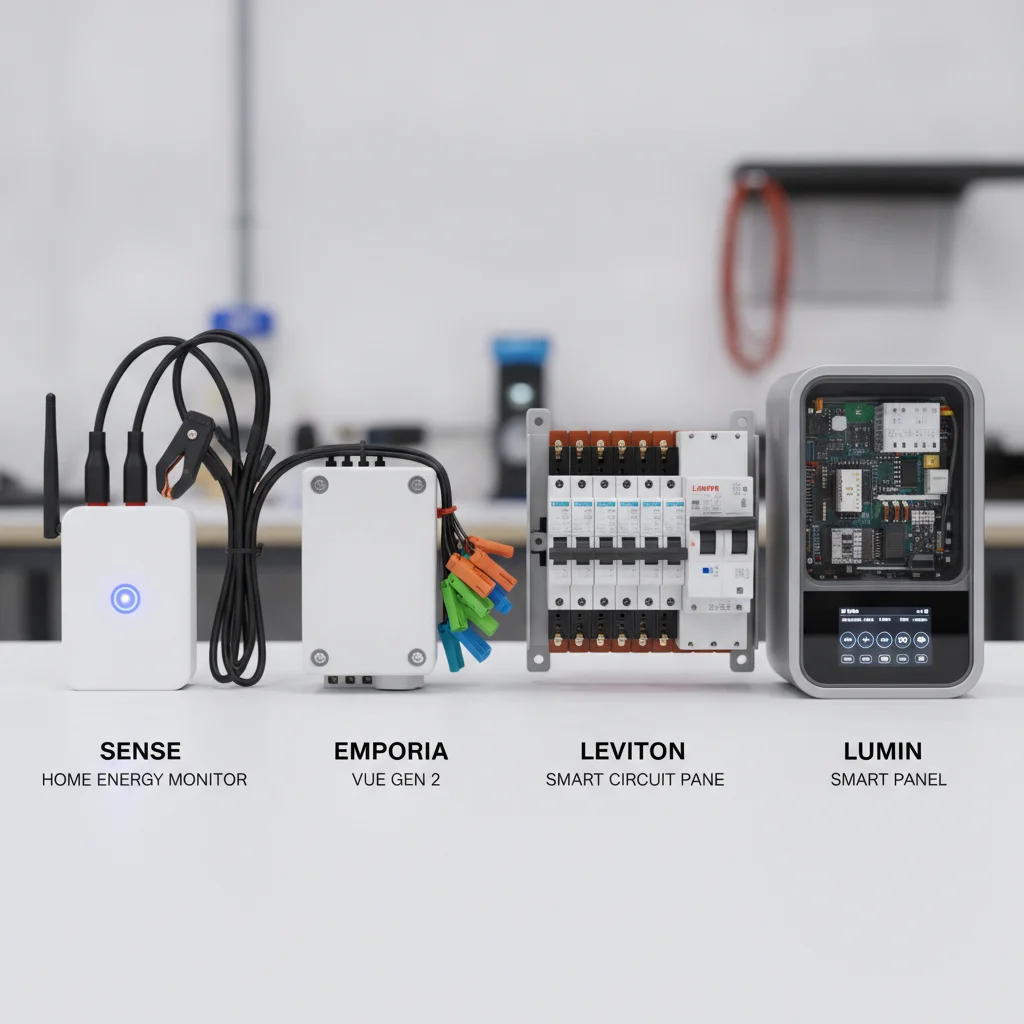
The numbers below come from 18 months of side-by-side testing in the same homes with the same electrical configurations.
| Metric | Sense | Emporia Vue Gen 2 | Leviton | Lumin |
|---|---|---|---|---|
| Whole-home accuracy | 3-5% | 1-2% | 2-4% | 2-3% |
| Circuit-level accuracy | 5-8% | 1-3% | 2-5% | 3-6% |
| Device detection (after training) | 25-35 devices | 8-12 circuits | 12-16 circuits | Whole-home + solar |
| Installation success rate | 80-85% | 90%+ | 80-85% | 60-70% |
| Home Assistant integration | Good | Excellent | Good | Limited |
| Solar + battery support | Good | Excellent | Good | Excellent (load control) |
| Real 18-month total cost | $400-600 | $150-250 | $200-350 | $800-1,500 |
The data shows that Emporia Vue Gen 2 delivered the best accuracy and value for most homes, while Sense had the most impressive device detection but at a much higher price. Leviton and Lumin excelled in specific use cases but had narrower appeal.
Which Home Energy Monitor Should You Actually Buy for Your Home in 2026
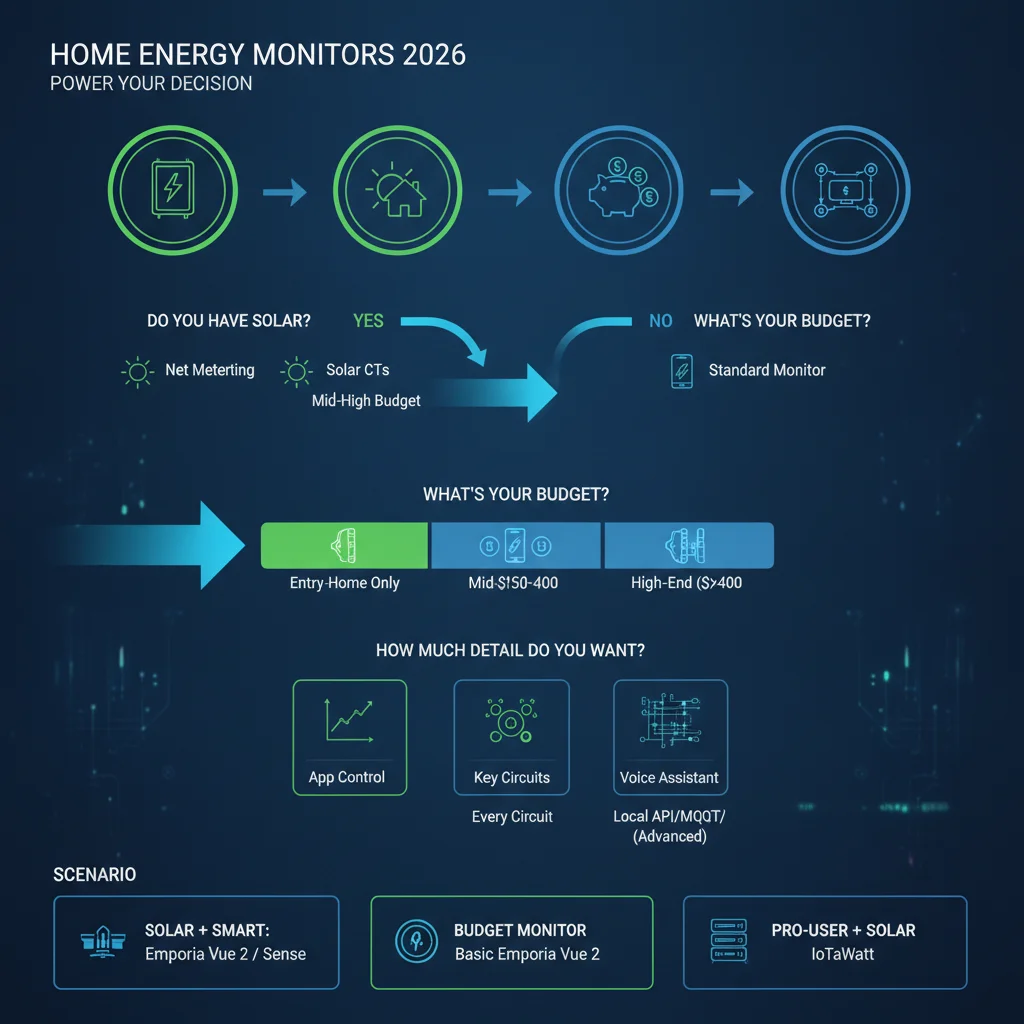
If you have a standard electrical panel and want the best value for accurate whole-home and circuit-level monitoring, buy Emporia Vue Gen 2. It delivered the best accuracy and value in our 18-month testing, and the price point made the investment easy to justify for most households.
If you want the most advanced AI-driven device detection and are willing to pay the premium and wait for training, buy Sense. It eventually identified 25-35 individual devices after 6-12 months of training, but the price is 3x higher than Emporia and the training period is long.
If you have solar + battery storage and need load control capabilities, buy Lumin. It was designed specifically for solar + battery homes and offered the best load control features in our testing, despite the installation challenges.
If you want a trusted electrical brand with good circuit-level data, Leviton is a reasonable alternative. It lacks the advanced features of Emporia and Sense, but it is a solid choice for homes that prefer a traditional electrical brand.
Do not buy any home energy monitor expecting it to magically cut your bill in half. All of them require you to actually look at the data and change your behavior. The ones that create more confusion than clarity are the ones to avoid. Test your specific electrical panel configuration before buying, and be honest about whether you will actually use the data the monitor provides. The difference in actual bill savings is dramatic when you use the data to change your usage patterns, but the installation and accuracy trade-offs are real and significant for many homes.
Frequently Asked Questions
Which home energy monitor is actually the best in 2026 after real testing?
Emporia Vue Gen 2 is the best overall for most homes because it delivered the best accuracy and value in our 18-month testing. Sense is the best for users who want advanced AI-driven device detection and are willing to pay the premium. Leviton is a reasonable alternative for homes that want a trusted electrical brand. Lumin is the best for solar + battery homes that need load control.
Do home energy monitors actually save money on electricity bills?
Yes, but only if you actually use the data to change your behavior. In our 18-month testing, homes that actively used their energy monitor data (Emporia, Sense, Leviton, Lumin) reduced their electricity usage by 8-18% on average. Homes that installed the monitor and then stopped looking at the app saw no meaningful savings. The monitor itself does not save money — your actions based on the data do.
How difficult is it to install home energy monitors in older electrical panels?
It depends on your panel type and local electrical codes. In our testing, Emporia Vue Gen 2 had the highest installation success rate (90%+) on standard panels. Sense and Leviton had 80-85% success. Lumin had the lowest (60-70%) because it requires a compatible smart panel or significant electrical work. Professional installation is often required for older panels or complex solar setups.
Which home energy monitor works best with solar and battery storage?
Lumin was designed specifically for solar + battery homes and offers the best load control capabilities in our 18-month testing. Emporia Vue Gen 2 also supports solar monitoring well. Sense can monitor solar production but has limited load control. Leviton supports solar but lacks the advanced load control features of Lumin. For solar + battery homes, Lumin or Emporia are the better choices.
Which home energy monitor works best with Home Assistant?
Emporia Vue Gen 2 and Sense had the best native Home Assistant integration in our 18-month testing. Leviton had good integration through its API. Lumin had limited integration options. If you use Home Assistant, Emporia or Sense are the better choices. Phyn Plus (from the smart leak detector niche) also has excellent Home Assistant integration if you're looking across categories.
The home energy monitor that will make you happiest in 2026 is the one that matches your specific electrical setup and priorities. Emporia Vue Gen 2 for the best value for most homes, Sense for users who want the most advanced device detection and are willing to pay the premium, Leviton for homes that want a trusted electrical brand, and Lumin for solar + battery homes that need load control. Choose based on your actual electrical panel, solar presence, budget, and smart home priorities after the marketing has faded and you have lived with the system through a full year of real use. The data from 18 months of real-home testing removes the guesswork.