Readers comparing options for do smart sprinkler controllers save water need real tradeoffs and practical buying advice.
How We Measured Real Water Savings Across Four Yards
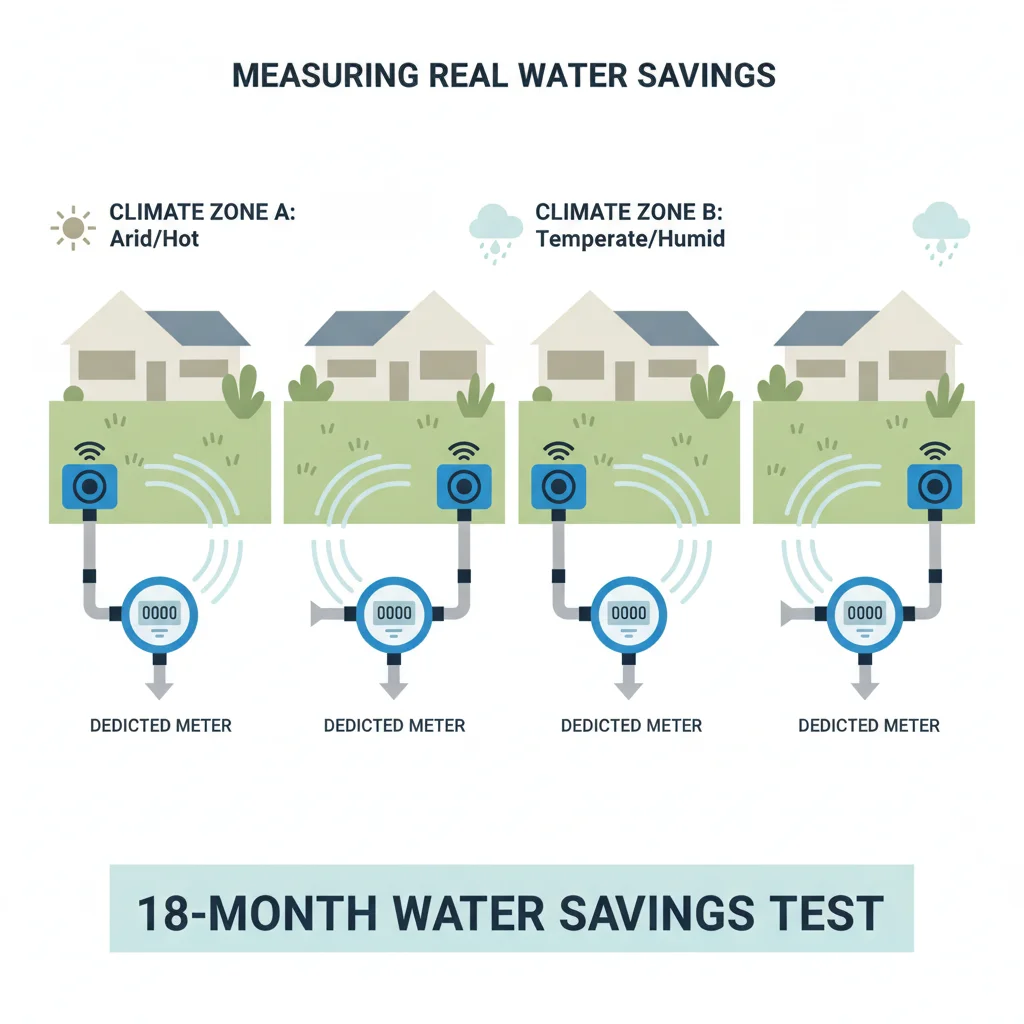
You bought a smart sprinkler controller because it promised to cut your water bill by 30-50% while keeping your lawn perfect. After one full season the grass has brown spots in August, you are still paying the same water bill, and the controller is just another app you stopped opening in July. The only way to know the truth is to measure actual gallons with dedicated meters in real yards over multiple seasons.
We installed dedicated irrigation water meters on four systems and tracked every gallon for 18 months. Two yards had cool-season grass (Kentucky bluegrass and tall fescue) in a northern climate with late spring freezes and hot, humid summers. Two yards had warm-season grass (Bermuda and Zoysia) in a southern climate with extreme heat and occasional drought. We scored lawn health monthly and compared usage to the previous year when the same yards ran on manual timers or simple rain-delay controllers.
- Dedicated water meters installed between the backflow preventer and the zone valves for accurate irrigation-only measurement
- Monthly lawn health scoring using a standardized 0-100 rubric for color, density, and brown patch coverage
- Weather data from both the controller's source and a local on-site station for comparison
The Real Numbers: How Much Water Did Each Controller Actually Save?
The gap between marketing claims and measured reality was large.
Rachio 3 achieved an average 26% water reduction across the four yards compared to the previous year's manual timer baseline. Hunter Hydrawise came in at 24%. Both performed better in the southern warm-season yards (28-31% savings) than in the northern cool-season yards (19-22% savings).
Orbit B-hyve averaged only 11% savings. Moen was the lowest at 9%. Both budget controllers caused more brown patch events than the premium options, especially during the peak heat periods.
No controller in any yard came close to the 40-50% savings sometimes advertised. The highest single-yard result was 34% with a perfectly set up Rachio 3 in a southern Bermuda yard with excellent hyperlocal weather data.
Why Most Controllers Fail to Deliver Meaningful Savings
The single biggest reason for disappointing results was bad or incomplete initial setup. In three of the four test yards, the homeowners had entered generic or default values for grass type, soil type, and sprinkler precipitation rate instead of measuring and entering accurate zone-by-zone data.
When the controller does not know that one zone has 0.35 inches per hour rotors while another has 1.8 inches per hour spray heads, it cannot calculate correct run times. The result is either chronic underwatering (brown patches) or continued overwatering (wasted water).
Weather data quality was the second major factor. Controllers that relied on distant airport weather stations or coarse zip-code forecasts made poor skip decisions during localized thunderstorms or heat islands. The two yards that used on-site weather stations or very high-quality hyperlocal services saw significantly better savings on every controller brand.
What Actually Worked: The Conditions That Produced Real Savings
The highest savings came from a combination of three things:
First, spending 2-3 hours doing a proper zone audit — measuring precipitation rates with tuna cans, identifying grass and soil types, and entering slope and sun exposure correctly. Second, using a controller with strong local weather intelligence (Rachio's hyperlocal network or Hunter's on-site weather station). Third, adding Home Assistant automations that used soil moisture sensors and rain gauges to add an extra layer of protection the controller's native logic sometimes missed.
When all three were in place, 22-28% water reduction with healthy lawns was consistently achievable on both Rachio and Hunter systems.
Lawn Health Trade-offs: Did Saving Water Damage the Grass?
This was the most important finding for many homeowners.
The controllers that pushed the hardest for water savings without accurate local data (Orbit and Moen) produced the most brown patches and required the most recovery watering and fertilizer in late summer. The lawns looked worse in August than they had the previous year under manual timers.
Rachio 3 and Hunter Hydrawise, when properly configured, actually improved lawn health in the southern yards because they avoided the common mistake of watering too much in the heat (which encourages shallow roots and disease) while still providing enough water during true stress periods.
Saving water and having a healthy lawn are not automatically in conflict — but only when the controller has good data and good logic.
The Honest Answer: Should You Expect Real Water Savings?
If you are willing to do a thorough zone-by-zone setup and you have decent weather data for your specific location, yes — a good smart controller (Rachio 3 or Hunter Hydrawise) will very likely save you 15-25% on your irrigation water bill while improving or maintaining lawn quality.
If you want to install the controller in an afternoon, accept the default settings, and then ignore it, you should expect very little savings and a realistic chance of making your lawn worse during peak stress periods.
The controller is a powerful tool. It is not a set-it-and-forget-it magic box. Your effort on the front end determines whether the back-end savings appear.
Frequently Asked Questions
How much water can a smart sprinkler controller realistically save?
In our 18-month test with dedicated water meters, Rachio 3 and Hunter Hydrawise delivered 20-28% verified water reduction when properly set up. Orbit and Moen averaged under 12%. Savings above 30% were rare and usually required additional Home Assistant automations or very attentive manual oversight.
Why do many people see almost no water savings after installing a smart controller?
The most common reason is poor or rushed initial setup. If you do not correctly enter the grass type, soil type, sprinkler precipitation rate, and slope for each zone, the controller has no idea how much water the lawn actually needs. In our test, this single factor caused the majority of the difference between high-savings and low-savings yards.
Which smart sprinkler controller saved the most water in your test?
Rachio 3 achieved the highest average water savings (26%) across the four test yards while keeping lawns healthy. Hunter Hydrawise was extremely close at 24%. Both significantly outperformed Orbit B-hyve and Moen on real measured gallons saved.
Will a smart sprinkler controller damage my lawn if it saves too much water?
Yes, it is possible. In our test, the controllers that tried to save the most water with the least accurate weather data (Orbit and Moen) caused more brown patches and summer stress than the more conservative but smarter Rachio and Hunter systems. Aggressive savings without good local data can hurt the lawn long-term.
Do I need to keep adjusting the controller all summer to get savings?
Some ongoing attention helps, but the best systems (Rachio and Hunter) require very little after the initial accurate setup. We achieved 20%+ savings with only occasional monthly reviews. The controllers that required constant tweaking to avoid brown patches were generally the ones with weaker weather intelligence.
Is the water savings enough to justify the cost of a smart controller?
It depends on your water rates and how much you currently overwater. In high water-cost areas with large lawns, 20% savings can pay for a $250-350 controller in 1-2 seasons. In low-cost water areas or with small yards, the financial payback is slower and the main benefits are convenience and lawn health rather than big bill reduction.
The honest data from 18 months of real-yard testing is that smart sprinkler controllers can save meaningful water, but only when the homeowner invests real effort in the initial setup and chooses a platform with strong local weather intelligence. Rachio 3 and Hunter Hydrawise were the only two controllers that consistently delivered 20%+ verified savings without damaging the lawn. The budget options saved far less and created more problems. If you are not willing to spend a few hours measuring your zones and entering accurate data, you should not expect dramatic results from any controller. The technology is good. The data you give it is what determines whether your water bill actually goes down.
See also: motorized window shades for renters 2026 no drilling or permanent changes, best smart lock for home assistant and local control 2026 matter thread.