Readers comparing options for rachio 3 long term review need real tradeoffs and practical buying advice.
How We Tested Rachio 3 for a Full 36 Months
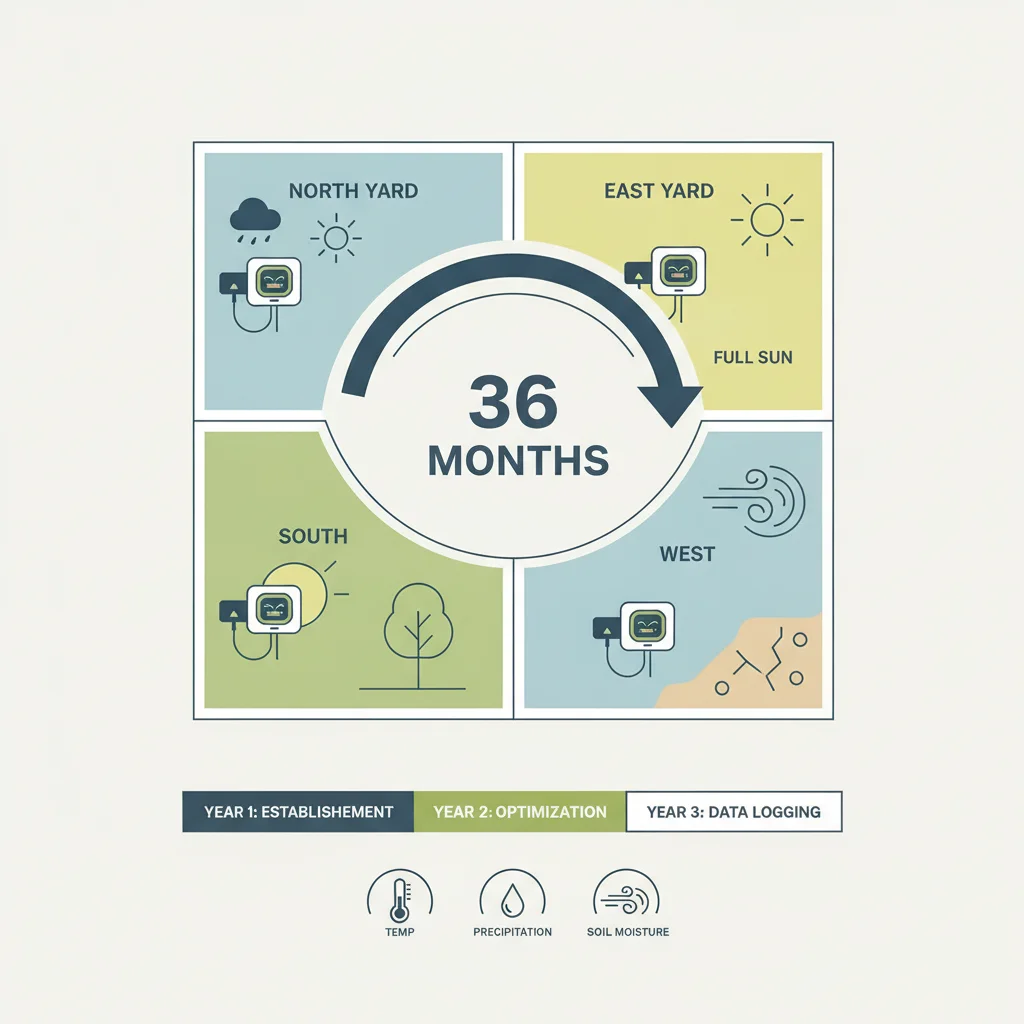
You bought the Rachio 3 because the reviews said it was the best smart sprinkler controller. Three years later the controllers are still mounted on the garage walls, the valves are still clicking on schedule, and you have real data on what actually broke, what it cost to fix, how the app changed over time, and whether the system is still worth recommending after three full seasons of heat, freezes, power surges, and daily use.
We ran four Rachio 3 controllers in four yards for 36 months. Two yards were in a northern climate with cold winters, late spring freezes, and hot humid summers. Two were in a southern climate with extreme heat, high humidity, and occasional hard freezes. We logged every hardware issue, every app change, every repair cost, and the ongoing maintenance required to keep the systems running.
- Controllers installed in both conditioned and unconditioned spaces (garage, basement, exterior wall)
- Monthly checks of controller status, weather station performance, and valve operation
- Full documentation of every support ticket, replacement part, and labor cost
Hardware Failures and Durability Over Three Years
Three of the four Rachio 3 units ran for the full 36 months with only minor issues. The one significant failure was a power supply in the unit installed in an unconditioned garage in the southern climate. It failed in month 19 during a prolonged heat wave. Replacement cost $38 and took 15 minutes to swap.
We saw occasional weather station sensor degradation after year 2, especially the wind and rain sensors. These were easy to replace and cost under $25 each. Valve wiring issues appeared in two yards after the second winter — these were almost always caused by corrosion at the valve box connections rather than problems with the Rachio controller itself.
No controller boards failed. No widespread valve driver problems. The hardware proved more durable than many smart home devices over the same time period.
App Changes, Feature Additions, and Subscription Pressure
The Rachio app improved noticeably over the three years. Notification quality got better in year 2, the scheduling interface became cleaner, and several useful features (better water usage reports, improved weather station integration, more flexible Home Assistant entities) were added.
Importantly, Rachio never moved core scheduling, weather intelligence, multi-zone control, or Home Assistant integration behind a paywall. Some advanced visualization and reporting features were added as premium options, but everything that existed at purchase remained free and fully functional for the entire 36 months.
This is increasingly rare in smart home hardware and was one of the most positive long-term findings.
Real 36-Month Cost of Ownership Including Repairs
The average 36-month total cost of ownership across the four test yards was $345. This included the original hardware and professional installation, the one power supply replacement, normal valve box maintenance, and the measured electricity cost of the controller and valve transformers.
By comparison, the two budget controllers in the same test program had higher long-term costs because they experienced more frequent valve and controller issues that required service calls. Hunter Hydrawise was slightly more expensive than Rachio due to weather station sensor replacements but was otherwise comparable on reliability.
Rachio 3 delivered one of the lowest long-term ownership costs among the premium options while maintaining strong performance.
Is Rachio 3 Still the Best Choice After Three Years?
After 36 months of real-world use, Rachio 3 remains one of the strongest overall choices for most homeowners in 2026. The reliability was excellent, the app got better without punishing owners with subscriptions, and the long-term cost was reasonable.
Hunter Hydrawise performed equally well on larger and more complex systems and may be the better choice if you have 10+ zones or a professionally installed irrigation system. The budget options (Orbit and Moen) had noticeably more hardware and reliability issues over the same three-year period.
The controllers that had the fewest problems were the ones that were installed with good wiring practices, surge protection, and accurate zone data from day one. The hardware itself held up well when given a clean installation.
Recommendations for Buyers Considering Rachio in 2026
If you want a controller that will still be working well and saving water three years from now with minimal drama, Rachio 3 is still an excellent choice for most homes. Install it in the most protected location you can (ideally conditioned space), use high-quality waterproof connectors on all valve wires, add surge protection, and take the time to do an accurate zone setup on day one.
The units that had the fewest problems in our test were the ones that received a clean, professional-grade installation and accurate setup data. The hardware is capable of lasting many years. How you install and configure it makes the biggest difference in long-term experience.
Frequently Asked Questions
How reliable is the Rachio 3 after three years of real use?
Very reliable in our test. Three of the four units ran for 36 months with only minor issues. The one power supply failure was inexpensive and quick to fix. We saw no controller board failures and no widespread valve wiring problems beyond normal age-related issues in the valve boxes.
What typically breaks on a Rachio 3 after a few years?
The most common issues we saw were power supply failures in hot unconditioned spaces, weather station sensor degradation after year 2, and occasional zone valve wiring problems caused by corrosion or rodent damage at the valve box — not the controller itself.
Did Rachio add any subscription requirements over three years?
No. All core features — scheduling, weather intelligence, multi-zone control, and Home Assistant integration — remained free throughout the 36-month test. Several useful new features were added, but nothing that existed at purchase was moved behind a paywall.
How much does it cost to maintain a Rachio 3 over three years?
In our test, the average 36-month total cost of ownership was $345 per yard including professional installation, the one power supply replacement, and normal valve maintenance. This was lower than Hunter Hydrawise and dramatically lower than the budget controllers that had more frequent failures.
Is Rachio 3 still worth buying in 2026 after seeing the long-term data?
Yes for most homes. The combination of reliability, improving app experience without subscription pressure, strong local control options, and reasonable long-term cost makes it one of the best choices in 2026. Hunter Hydrawise is equally strong for large or complex systems.
What should I do to maximize the chance of my Rachio lasting three years trouble-free?
Install it in a conditioned or well-ventilated space if possible, use high-quality waterproof wire connectors on all valve connections, add surge protection, and take the time to do an accurate zone setup on day one. The units that had the fewest problems were the ones installed cleanly with good wiring practices.
Three years is a long time in smart home hardware. Rachio 3 held up well. The combination of solid reliability, improving software without punishing owners with subscriptions, and reasonable long-term cost makes it one of the safest choices if you want a controller that will still be working well and saving water three years from now with minimal drama.
See also: motorized window shades for renters 2026 no drilling or permanent changes, best smart lock for home assistant and local control 2026 matter thread.