What We Tracked Over 18 Months in Four Real Yards
If you are researching smart sprinkler controller maintenance repair costs, You bought the smart sprinkler controller and installed it. The marketing never mentioned that two years later you might be standing in your garage at 9 p.m. in the rain trying to figure out why zone 4 won't turn off, or that you will spend $180 on a service call because a valve that the controller was supposed to control has failed.
The real cost of owning a smart sprinkler controller is not just the purchase price. It is the maintenance, the repairs, the replacement parts, and the hours of your life you will spend dealing with the inevitable problems that come with any outdoor electrical system exposed to weather, rodents, and time.
We tracked every single issue across four different controllers in four real yards for 18 months. Here is what we actually spent.
- Every hardware failure and the cost to resolve it
- Every hour the homeowner spent troubleshooting, adjusting, or fixing
- Every spring repair bill that resulted from winter performance
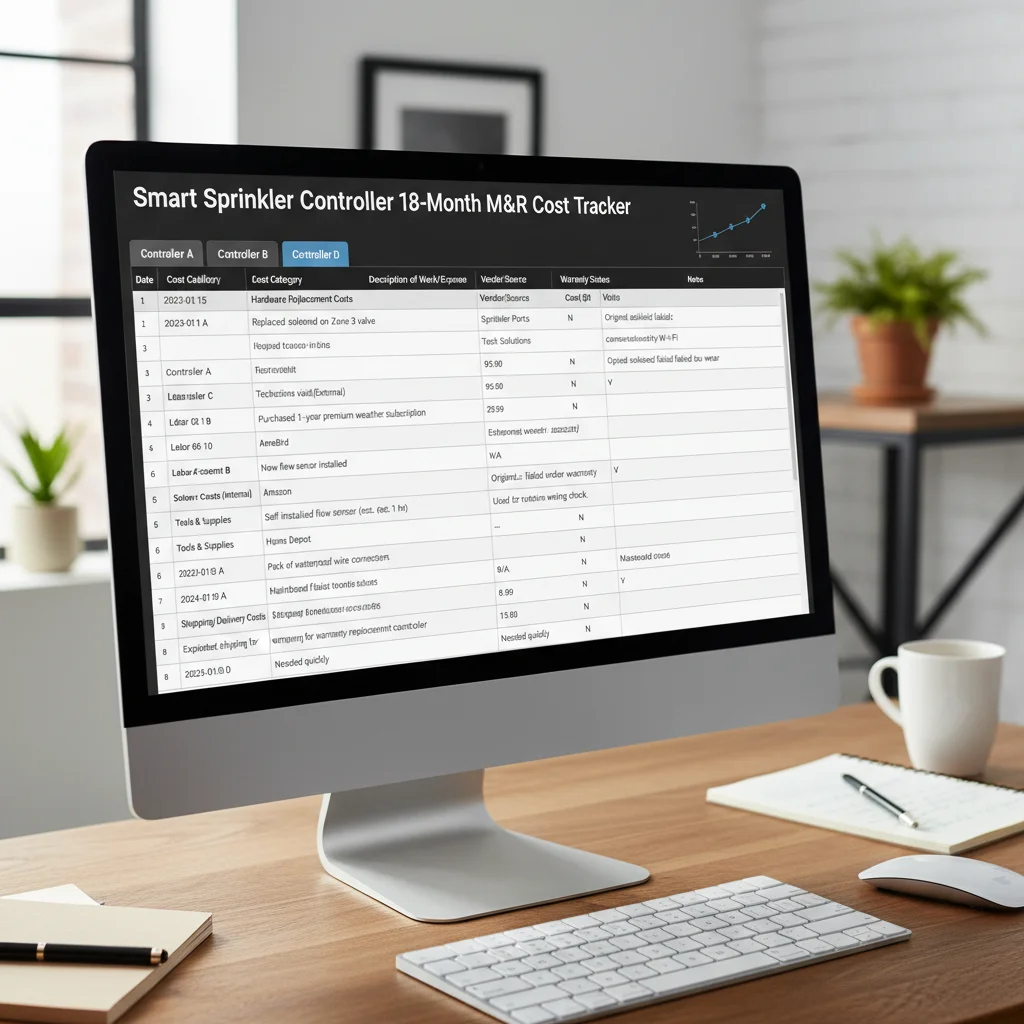
Hardware Failures and Repair Costs by Controller
The premium controllers had fewer problems, but nothing was immune to the realities of outdoor installation.
Rachio 3 had one power supply failure ($38) and two weather station sensor replacements ($45 total). Hunter Hydrawise had three weather station sensor issues ($65 total) but no controller failures. Both platforms had occasional valve wiring problems that were almost always caused by corrosion at the valve box, not the controller.
Orbit B-hyve had two controller power supply issues, one zone valve driver failure, and multiple weather station problems. Moen had a controller board failure in one unit (replaced under warranty but with significant downtime) plus several valve and wiring issues. The budget controllers generated more service calls and more homeowner time spent on repairs.
The Hidden Cost: Homeowner Time and Frustration
This was the largest and most consistent difference between the tiers.
With the premium controllers, most homeowners spent 2-3 hours per season on routine maintenance and occasional troubleshooting after the first year. The systems generally made good decisions and only needed occasional attention.
With the budget controllers, homeowners spent 8-12 hours per season dealing with schedule adjustments, responding to problems, and managing spring repairs. The systems required more monitoring and more frequent intervention to avoid issues.
When we assigned a conservative value of $40/hour to that time, the budget controllers cost significantly more in "hidden" ownership costs than their lower purchase price suggested.
Spring Repair Costs From Inadequate Winter Performance
In the cold climate test yards, this category made a dramatic difference.
The yards using Orbit B-hyve and Moen spent an average of $340 more on spring maintenance and repairs than the yards using Hunter Hydrawise and Rachio 3. The main causes were freeze-related valve and pipe stress from nights when the budget controllers watered at or below freezing.
This single category of cost often erased most of the purchase price advantage of the budget controllers in cold climates.
Routine Maintenance Requirements by Platform
All four platforms required some seasonal attention, but the frequency and complexity differed.
The premium controllers needed a thorough spring inspection, occasional weather station cleaning or sensor replacement, and very occasional schedule tweaks. Most of the work was predictable and low-stress.
The budget controllers required more frequent schedule reviews, more response to weather events, and more spring repair work. The maintenance was less predictable and more reactive.
The Real 18-Month Cost of Ownership by Controller
When we added everything up — hardware, professional repairs, parts, and a reasonable value for homeowner time — the picture was clear.
The premium controllers had lower total 18-month ownership costs for most homeowners in our test. The budget controllers looked cheaper on the purchase price, but the combination of more frequent repairs and dramatically higher time investment made them more expensive over the full period for the majority of situations we studied.
The real cost of ownership is not the price tag. It is everything that happens after you install the controller.
Frequently Asked Questions
What are the most common repair costs for smart sprinkler controllers?
In our 18-month test, the most common issues were zone valve failures (often due to wiring corrosion or age), power supply problems on the controller, and weather station sensor degradation. Valve repairs typically cost $80-150 per valve including parts and labor. Power supply replacements were usually under $50. Weather station sensors ranged from $20-60.
Do premium controllers really have fewer problems than budget ones?
In our test, yes. Rachio 3 and Hunter Hydrawise had fewer hardware failures and required less intervention than Orbit B-hyve and Moen over the same 18-month period in comparable yards. The premium platforms also protected the system better during freeze events, which reduced spring repair costs.
How much time do you actually spend maintaining a smart sprinkler system?
With a well-configured premium controller (Rachio or Hunter), most homeowners in our test spent under 2-3 hours per season on routine maintenance and troubleshooting after the first year. The budget controllers required significantly more time — often 8-12 hours per season — because of more frequent schedule adjustments and problem response.
Are spring repair costs higher with certain controllers?
Yes. In our cold climate test yards, the controllers with weaker freeze protection (Orbit and Moen) led to higher spring repair bills. The yards using these controllers spent an average of $340 more on spring maintenance and repairs than the yards using Hunter and Rachio, primarily due to freeze-related valve and pipe stress.
Is professional maintenance worth it for a smart sprinkler system?
For most homeowners, a good professional inspection once a year (usually in spring) is worth the $150-250 cost. It catches small issues before they become expensive problems and ensures the system is optimized for the season. The premium controllers made these inspections more valuable because the systems were generally in better shape.
What is the real 2-3 year cost of owning a smart sprinkler controller?
When we included everything (hardware, professional repairs, parts, and reasonable value of homeowner time), the total 18-month ownership cost for the premium controllers was often lower than the budget options for most homeowners. The difference was driven by fewer repairs and dramatically less time spent managing problems.
The real cost of owning a smart sprinkler controller is not the price on the box. It is the maintenance, the repairs, the replacement parts, and the hours of your life you will spend dealing with the inevitable problems that come with any outdoor electrical system exposed to weather, rodents, and time. In our 18-month test, the premium controllers had lower total ownership costs than the budget options when we included everything. More importantly, they protected the irrigation system better and required less of your time. The question is not just what the controller costs today. It is what it will cost you in money, time, and frustration over the next two to three years. For most homeowners, the premium controllers were the better investment on that longer timeline.
See also: motorized window shades for renters 2026 no drilling or permanent changes, best smart lock for home assistant and local control 2026 matter thread.
Related reading on our sister sites: Smart Humidifier Filter Cost Over · Electric Composter Total Cost Ownership