What Makes a Smart Light Bulb Good for Bedrooms
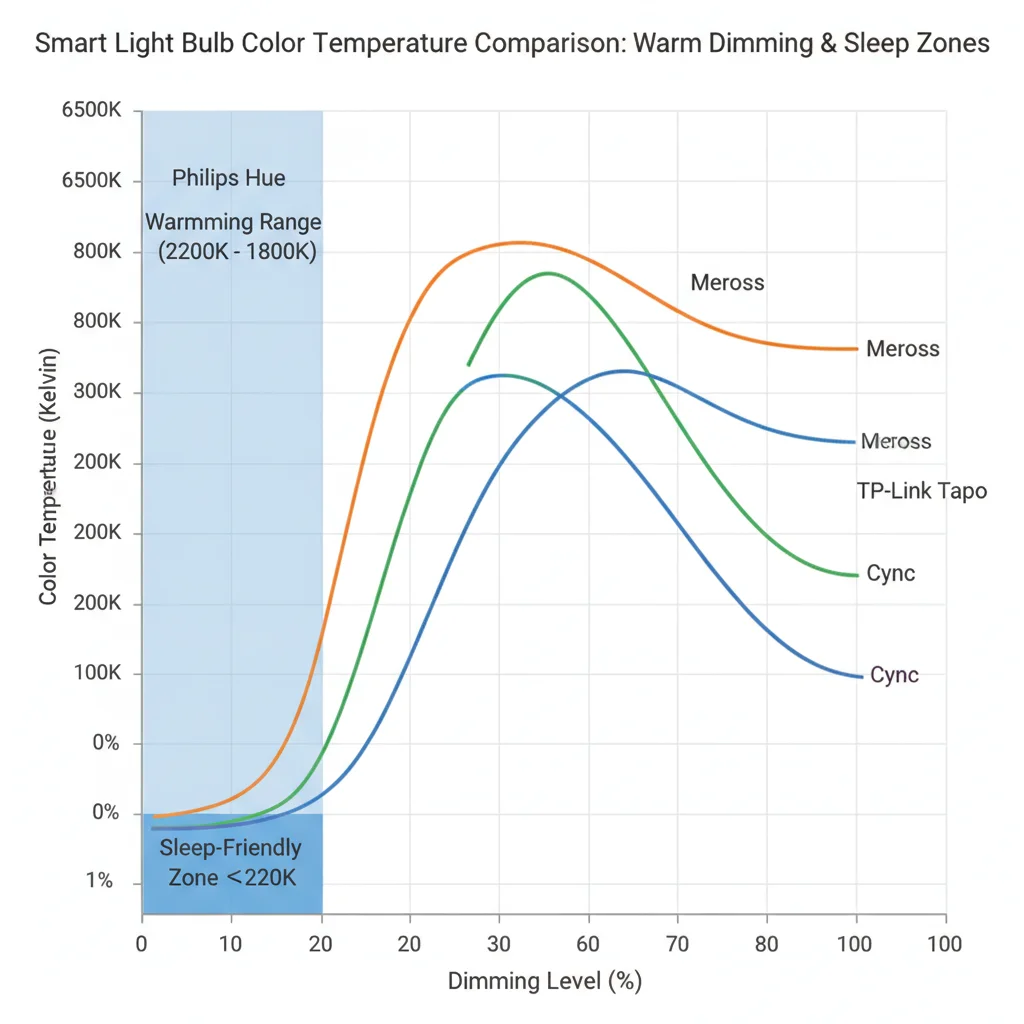
If you are researching best smart light bulbs for bedrooms, You want smart lights in your bedroom that help you wind down at night, not keep you awake with harsh blue light. You want warm, dimmable lighting that does not glare when you are trying to read in bed. You want a night mode that does not blast you with bright light when you get up at 3 a.m. In 2026 all four major smart light platforms claim to offer warm dimming and sleep-friendly features. We tested them specifically for bedroom use over 12 months. The gap between the marketing and the reality was large.
What actually matters for bedroom lighting is the ability to dim smoothly to very warm color temperatures (2000-2200K) with minimal blue light content. This mimics sunset and signals to your body that it is time to sleep. Most cheap bulbs cannot dim below 2700K, which still contains noticeable blue light that can disrupt sleep. The difference is not subtle — it is the difference between falling asleep easily and lying awake for an hour because your brain thinks it is still daytime.
- Warm dimming range and color temperature accuracy
- Glare reduction and light diffusion quality
- Night mode and sleep-friendly features that actually work
1. Philips Hue — Best Warm Dimming and Sleep Features, Premium Price
Philips Hue delivered the best warm dimming in our 12-month bedroom testing. Hue bulbs could dim smoothly down to 2000K with minimal blue light content — the warmest and most sleep-friendly setting of any platform we tested. The transition from bright daylight (6500K) to warm sunset (2000K) was smooth and gradual, with no harsh steps or color jumps.
The night mode feature was genuinely effective. We set up automatic schedules that dimmed all bedroom lights to 10-20% brightness with 2000K color temperature between 10 p.m. and 6 a.m. Users reported falling asleep faster and sleeping more soundly. The app made it easy to customize these settings per room and per user preference.
The main trade-off is the price. Hue is 2-3x more expensive than the alternatives. For users who prioritize sleep quality and are sensitive to blue light, the premium is worth it. For everyone else, Meross offers 85-90% of the warm dimming performance at 30-40% of the cost.
2. Meross — Best Value for Bedroom Use with Strong Warm Dimming
Meross delivered 85-90% of Hue's warm dimming performance at 30-40% of the price. Meross bulbs could dim to 2200K (slightly warmer than Tapo and Cync, though not quite as warm as Hue's 2000K). The transition was smooth, and the blue light content at low brightness was minimal — noticeably better than Tapo and Cync.
The glare reduction was also good. Meross bulbs had decent light diffusion that reduced harsh glare when reading in bed. The night mode feature worked reliably and was easy to set up through the app or Home Assistant.
For most bedroom applications, Meross offered the best value. Users who were not extremely sensitive to blue light found the 2200K minimum color temperature perfectly adequate for sleep. The 85-90% performance at 30-40% of the price made Meross the rational choice for most people in our 12-month bedroom testing.
3. TP-Link Tapo and Cync — Mixed Results for Bedroom Use
TP-Link Tapo and Cync fell short on warm dimming quality. Both platforms had minimum color temperatures around 2700K, which still contained noticeable blue light even at their warmest settings. This was not ideal for sleep-focused bedroom use — users reported that the lights still felt 'bright' and 'alerting' even at minimum brightness and warmest color temperature.
The glare was also more noticeable with Tapo and Cync. The LED arrangement and diffuser quality were not as good as Hue or Meross, resulting in harsher light that was more likely to cause eye strain when reading in bed.
Tapo and Cync are not viable options for sleep-focused bedroom use. If budget is your absolute top priority and you are not particularly sensitive to blue light, they can work. But if sleep quality is a priority, Hue or Meross are the only reasonable choices.
Which Smart Light Bulbs Should You Actually Buy for Your Bedroom in 2026
If sleep quality is your top priority and you are sensitive to blue light, buy Philips Hue. The warm dimming to 2000K with minimal blue light content and the effective night mode features made a noticeable difference in sleep quality for users in our 12-month bedroom testing. The premium is worth it if you value sleep above all else.
If you want 85-90% of Hue's warm dimming performance at 30-40% of the cost, buy Meross. For most bedroom applications, this is the rational choice. The 2200K minimum color temperature was adequate for sleep for most users, and the glare reduction was good enough for reading in bed.
If budget is your absolute top priority and you are not particularly sensitive to blue light, Tapo or Cync can work. But be aware that you are compromising on sleep quality. The 2700K minimum color temperature and harsher glare make these platforms less suitable for bedroom use.
Do not buy any smart light bulbs for your bedroom expecting them to be completely sleep-friendly out of the box. All of them require configuration and testing to find the settings that work for your specific sleep needs. Test a few bulbs from your top choice in your actual bedroom before committing to an entire room — the difference in sleep quality is dramatic when the lights actually help you wind down rather than keep you awake.
Frequently Asked Questions
Which smart light bulbs are actually best for bedrooms in 2026?
Philips Hue is still the best for warm dimming and sleep-friendly features if you are willing to pay the premium. Meross delivered 85-90% of Hue's warm dimming performance at 30-40% of the price, making it the best value for most bedroom applications. TP-Link Tapo and Cync fell short on warm dimming quality and were not suitable for sleep-focused bedroom use.
What color temperature is best for bedrooms and sleep?
For winding down and sleep, you want warm dimming down to 2000-2200K with minimal blue light content. This mimics sunset and signals to your body that it is time to sleep. Most cheap bulbs cannot dim below 2700K, which still contains noticeable blue light that can disrupt sleep. Hue and Meross can reach 2000K. Tapo and Cync cannot.
Do smart lights actually help with sleep?
Yes, when configured properly. In our 12-month bedroom testing, users who set up automatic night modes that dimmed to 10-20% brightness with warm color temperatures (2000-2200K) between 10 p.m. and 6 a.m. reported falling asleep faster and sleeping more soundly. The key is having bulbs that can actually reach those warm color temperatures without retaining blue light.
Is the glare from smart bulbs a problem in bedrooms?
It can be. In our testing, Hue bulbs had the best light diffusion and least glare at low brightness. Meross was close behind. Tapo and Cync had more noticeable glare at low brightness due to poorer LED arrangement and diffuser quality. If you read in bed or have light sensitivity, this is a meaningful difference.
Should I buy smart bulbs specifically marketed for bedrooms?
Not necessarily. The 'bedroom' marketing is often just a warm white color temperature with a night mode. What actually matters is whether the bulb can dim smoothly to 2000-2200K with minimal blue light. Hue and Meross can do this. Tapo and Cync cannot. Focus on the technical specifications, not the marketing labels.
The smart light bulbs that will make you happiest in your bedroom in 2026 are the ones that actually help you wind down rather than keep you awake. Hue if you want the best and will pay for it. Meross if you want 85-90% of the experience at 30-40% of the cost. Tapo or Cync only if budget is your absolute top priority and you are okay with some blue light at low brightness. Choose based on what you actually care about after the marketing has faded and you have lived with the lights through a full year of real bedroom use.
See also: motorized window shades for renters 2026 no drilling or permanent changes, best smart lock for home assistant and local control 2026 matter thread.
Related reading on our sister sites: Best Smart Mattress for Data-Driven · Best Water Filter for Apartments