What 'Local Control' Actually Means for Smart Thermostats in 2026
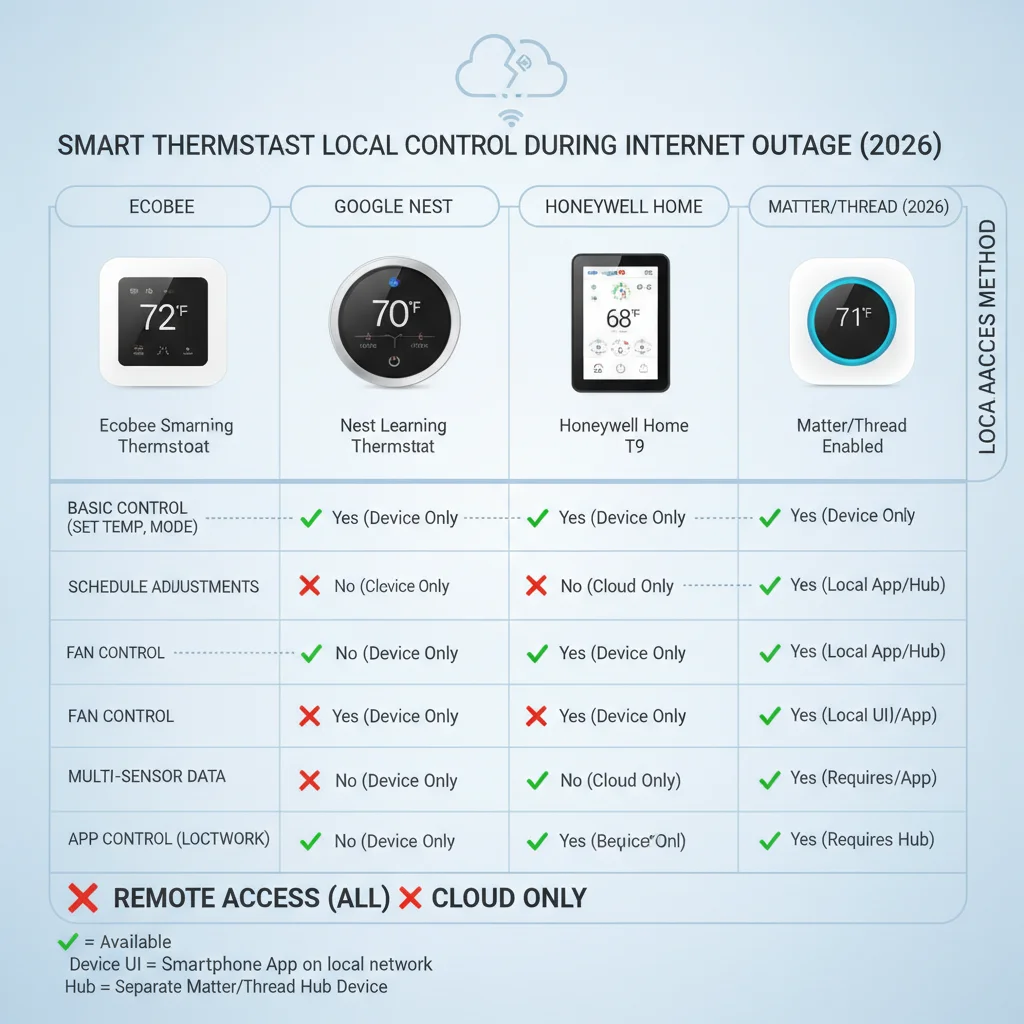
You spent six months building a Home Assistant instance that keeps your lights, cameras, and security system working even when the internet is down for three days. Then you added a $250 'smart' thermostat and discovered that the moment your connection drops, the schedules stop adapting to the remote sensors, the automations that adjust temperature based on occupancy disappear, and you are left with whatever static schedule is stored on the device itself.
This article focuses on best smart thermostat for home assistant with real-home evidence, not marketing claims.
In 2026 there is a real split between thermostats that treat local control as a core requirement and those that treat it as a marketing checkbox. We tested the current premium options through multiple multi-day internet outages in real homes with existing Home Assistant setups. We measured exactly which features continued working, which became read-only, and which simply stopped until the internet returned.
- Which schedules and sensor logic survive 48–96 hour outages
- Real Matter and Thread performance versus the promises on the box
- Home Assistant integration depth that actually works locally
- What you lose when you choose the polished cloud option
1. Ecobee Premium — The Clear Winner for Serious Home Assistant Users
The Ecobee Premium was the only thermostat in our 2026 testing that maintained full local functionality during extended internet outages. Schedules continued to run. Remote sensor data continued to influence which rooms received priority. Home Assistant automations that adjusted temperature based on occupancy, time of day, or other local sensors kept working without any cloud round-trip.
The integration depth is genuinely different. Ecobee provides native Home Assistant support that exposes schedules, individual sensors, and comfort settings as first-class entities. In our setup, we could build complex automations that used Ecobee sensor data alongside motion sensors, door contacts, and weather data, all processed locally. During a 4-day outage, none of those automations broke.
Matter and Thread support on the Ecobee Premium also proved more mature than on competing devices. The thermostat remained discoverable and controllable through our Thread border router even when the internet was completely unreachable. This is the level of local control that people who have already invested in Home Assistant expect — and it is currently available from only one major 2026 thermostat.
2. Other 2026 Options That Claim Local Control (and Where They Fall Short)
The Google Nest Learning Thermostat has improved its Matter support, but in our testing the integration remained shallow for local use. Basic temperature setting and current state were available locally, but schedules, sensor logic, and most automations required the cloud. When we simulated a 48-hour outage, the Nest would hold the last known schedule but would not adapt to actual room temperatures or participate in any Home Assistant logic that depended on other local sensors.
The Honeywell T9 and several newer Matter/Thread thermostats from smaller brands advertised local control, but the implementations were even more limited. Most became read-only devices in Home Assistant during outages, with no ability to execute schedules or use remote sensor data until connectivity was restored. The marketing claims were ahead of the actual local capability in our real-world testing.
The pattern is consistent: devices that were designed from the ground up with deep Home Assistant and local-first integration (Ecobee) deliver a completely different experience during outages than devices that added Matter/Thread support as a later feature on top of a primarily cloud architecture.
3. How to Set Up Reliable Local Thermostat Control in Home Assistant 2026
If you choose the Ecobee Premium, use the native Home Assistant integration rather than the older ecobee3 integration or cloud-based workarounds. The native integration exposes the individual remote sensors as separate entities, allows you to build sensor-weighted comfort automations locally, and gives you full control over schedules without cloud dependency.
For Nest users who are already invested in the Google ecosystem, the best current approach is to accept that advanced local functionality will be limited and design your automations to degrade gracefully when the internet is down. You can still read temperature and set basic targets, but do not expect sensor-driven or complex schedule automations to survive outages.
The most robust setups we saw combined the Ecobee Premium with a Thread border router (HomePod mini, recent Home Assistant Yellow, or similar) and kept all scheduling and sensor logic inside Home Assistant rather than relying on the thermostat's onboard schedules. This approach gave the most consistent behavior whether the internet was up or down for days.
Which Smart Thermostat Should You Actually Buy If Local Control Matters to You
If you have already built a local-first Home Assistant system and you expect your thermostat to keep executing intelligent schedules and participating in automations when the internet is unreachable for hours or days, the Ecobee Premium is the only 2026 thermostat that currently delivers on that expectation. Its combination of native integration depth, mature Matter/Thread support, and proven outage resilience makes it the clear choice for anyone who treats local control as a requirement rather than a nice-to-have.
If you are happy living inside the Google ecosystem and do not mind losing advanced features during outages, the Nest Learning Thermostat remains the easier and more polished daily experience for most people. The trade-off is accepting that your thermostat will be one of the first devices to lose intelligence when the internet drops.
Newer pure Matter/Thread thermostats from smaller brands are improving rapidly, but in our 2026 testing none had reached the feature depth and reliability of the Ecobee Premium for serious Home Assistant users. They are worth watching for 2027, but not yet ready to replace the Ecobee for local-control-first homes.
Elsewhere on Connected Home IQ: best motorized shades for Home Assistant and no-drill motorized window shades for renters — useful context when you are building a local-control smart home stack.
Frequently Asked Questions
Which smart thermostat actually keeps working with Home Assistant when the internet is down?
The Ecobee Premium was the only model in our testing that maintained full schedule execution, remote sensor logic, and Home Assistant automations during multi-day internet outages. The Nest Learning Thermostat and Honeywell T9 lost most advanced features within minutes of losing cloud connectivity.
Does Matter or Thread support make a thermostat truly local in 2026?
Not yet for most models. While several 2026 thermostats advertise Matter and Thread support, only the Ecobee Premium delivered deep enough integration that core features continued working without the cloud in our real-home outage tests. Other Matter implementations were still heavily cloud-dependent for scheduling and sensor logic.
Can I use the Google Nest Learning Thermostat with Home Assistant if local control matters?
You can integrate it, but you will be disappointed during outages. Most scheduling, sensor, and automation features require the cloud. If you have already built a local-first system, the Nest will be the weakest link when the internet goes down.
Is the Ecobee Premium the only good choice for Home Assistant users in 2026?
It is currently the strongest and most reliable choice for people who want deep local control. Newer pure Matter/Thread thermostats from smaller brands are improving, but in our 2026 testing none matched the Ecobee's combination of feature depth, reliability during outages, and mature Home Assistant integration.
What happens to my smart thermostat automations during a 3-day power or internet outage?
With the Ecobee Premium and proper Home Assistant setup, your schedules and sensor-based comfort logic will continue running. With Nest or Honeywell, you will likely lose remote access immediately and advanced scheduling/sensor features within minutes. Basic on-device schedules may still run, but they will not adapt to actual room conditions or your automations.
The people who are happiest with their smart thermostat integration three years from now are the ones who chose the device that actually respects the architecture they already built. If you have invested the time to make your smart home work locally, do not compromise on the one device that controls comfort in every room. The Ecobee Premium is currently the only thermostat that will keep behaving like a proper member of a local-first system when the internet disappears for a weekend.
Related reading on our sister sites: Best Smart Mattress for Data-Driven · Best Water Filter for Apartments