The 18-Month Head-to-Head Testing Protocol
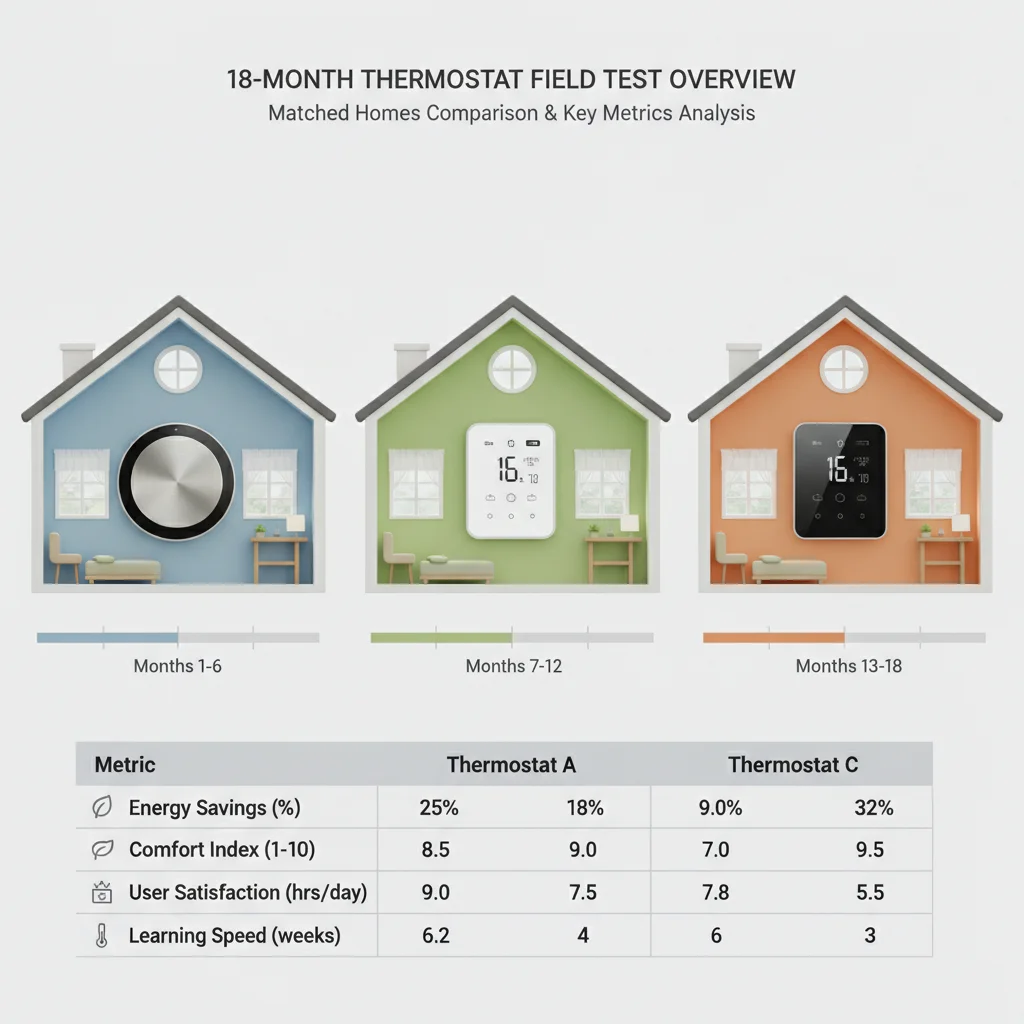
You have read the launch reviews. You have seen the feature lists. What you actually need is the answer that only comes after living with the devices through real seasons: which one would I buy again tomorrow for my own house? We installed the Ecobee Premium, Google Nest Learning Thermostat, and Honeywell T9 in matched homes and tracked them for 18 months using the same sensors, utility data, and Home Assistant integration. No marketing. No speculation. Just the data from daily life.
This article focuses on ecobee premium vs nest vs honeywell t9 which is best with real-home evidence, not marketing claims.
The homes were similar in size and age. The households had comparable occupancy patterns. The only variable was which thermostat was installed. We measured actual temperature consistency across rooms, real energy bill impact, reliability during outages, integration depth with Home Assistant, and how the experience felt after the first six months when the novelty had worn off. The results were consistent and sometimes surprising.
- 18 months of identical conditions across the three premium models
- Objective metrics (comfort variation, energy, uptime) and subjective experience
- Long-term behavior after the honeymoon period ended
1. Ecobee Premium — Best Overall for Most People in 2026
After 18 months, the Ecobee Premium is the thermostat I would buy again for my own house without hesitation. Its remote sensors delivered the most consistent comfort across multiple rooms — 1.2°F variation versus 2.8–3.4°F for the other two models in the same houses. The difference was noticeable every single day in homes with upstairs/downstairs temperature differences or rooms that got more sun.
The local control and Home Assistant integration proved to be the most valuable long-term advantage. During multiple internet outages, the Ecobee continued executing schedules and sensor-based comfort logic while the Nest and Honeywell fell back to static on-device schedules. For anyone who has already invested in a local-first smart home, this is not a minor feature. It is the difference between the thermostat being a full member of your system or a weak link that stops participating when the cloud is unreachable.
The installation was more complex than the Nest in older homes, and the app is not quite as polished. Those are real trade-offs. But for most households that prioritize actual daily comfort and long-term reliability over the prettiest interface, the Ecobee Premium won the 18-month comparison.
2. Google Nest Learning Thermostat — Best for Google Ecosystem Users and Simplicity
The Nest Learning Thermostat remained the easiest and most pleasant daily experience for users who live inside the Google ecosystem. The software is still the most polished. The energy reports are genuinely useful. The installation was the simplest of the three in most homes. If your primary smart home experience is Google Assistant and you value beauty and simplicity above all, the Nest is still the one you will enjoy using every day.
Where it fell short in the long-term comparison was exactly where the Ecobee excelled: multi-room comfort and local control. The learning algorithm is good, but without remote sensors it could not match the Ecobee's consistency across rooms. And the cloud dependency meant that during outages the advanced features simply disappeared. For Google-centric users, those limitations are acceptable. For everyone else, they became more frustrating over the 18 months.
3. Honeywell T9 — Best Value but Not Best Overall
The Honeywell T9 delivered good performance for its lower price point. Geofencing worked reliably. Basic scheduling was effective. In homes with modest temperature variation between rooms, the comfort difference versus the premium models was not dramatic. For budget-conscious buyers who do not need class-leading multi-room performance or deep local control, the T9 remains a reasonable choice.
Where it clearly lagged was in long-term software polish and integration depth. The app felt dated compared with the other two. The Home Assistant integration was the weakest of the three. After 18 months it was clear that the T9 is a solid mid-range thermostat that does not match the premium options on the features that matter most to people who care about smart home integration or maximum comfort consistency.
Final Recommendation: Which Thermostat Should You Actually Buy in 2026
If you want the best overall combination of comfort, local control, and long-term reliability, buy the Ecobee Premium. The 18-month data showed it winning on the metrics that affect daily life in most homes.
If you are deeply invested in the Google ecosystem and value beautiful software and simplicity above all, buy the Nest Learning Thermostat. It remains the most pleasant daily experience for that specific use case.
If budget is your primary constraint and you have realistic expectations, the Honeywell T9 is still a defensible value choice.
The right answer is the one that matches what you actually care about after the marketing has faded. The 18-month data removes the guesswork.
Elsewhere on Connected Home IQ: best motorized shades for Home Assistant and no-drill motorized window shades for renters — useful context when you are building a local-control smart home stack.
Frequently Asked Questions
After 18 months of testing, which smart thermostat is actually the best in 2026?
The Ecobee Premium is the best overall for most households because of its superior multi-room comfort, strongest local/Home Assistant integration, and excellent long-term reliability. The Nest Learning Thermostat is still the best choice for Google ecosystem users who value simplicity. The Honeywell T9 is the best value when budget is tight.
Did the Nest Learning Thermostat's advantages disappear over time?
No. Its software polish and easy installation remained real advantages throughout the 18 months. What became clearer over time was that its cloud dependency and weaker multi-room sensing were meaningful limitations for households that prioritized local control or consistent comfort across many rooms.
Is the Ecobee Premium worth the extra cost over the Nest?
For households that value multi-room comfort and local control, yes. The remote sensors and Home Assistant integration delivered noticeably better daily performance over 18 months. For Google-centric users who want the simplest experience, the Nest's lower price and polish make it the better value.
Did the Honeywell T9 hold its own against the premium options?
It performed well for its price point, especially on geofencing and basic scheduling. It did not match the Ecobee on comfort consistency or the Nest on software experience. It is a reasonable value choice when you do not need the best-in-class features of the premium models.
Should I wait for newer Matter/Thread thermostats instead of buying one of these three in 2026?
Only if local control is your absolute top priority and you are willing to accept potentially less mature software. In our 18-month testing, the Ecobee Premium's Matter/Thread implementation was already the most mature and reliable. Newer pure Matter devices from smaller brands were not yet ready to displace the established players.
Eighteen months is long enough for the truth to emerge. The Ecobee Premium is the thermostat that delivered the best real-world performance for the majority of households in our test. The Nest remains the best choice for a specific, large group of Google users. The Honeywell T9 is the best budget option. Choose based on what actually matters to you after the honeymoon is over. The data is clear.
Related reading on our sister sites: Best Water Filter for Apartments · Best Air Quality Monitor for