The Real-World Test: 3 Years of Utility Data Across 12 Homes
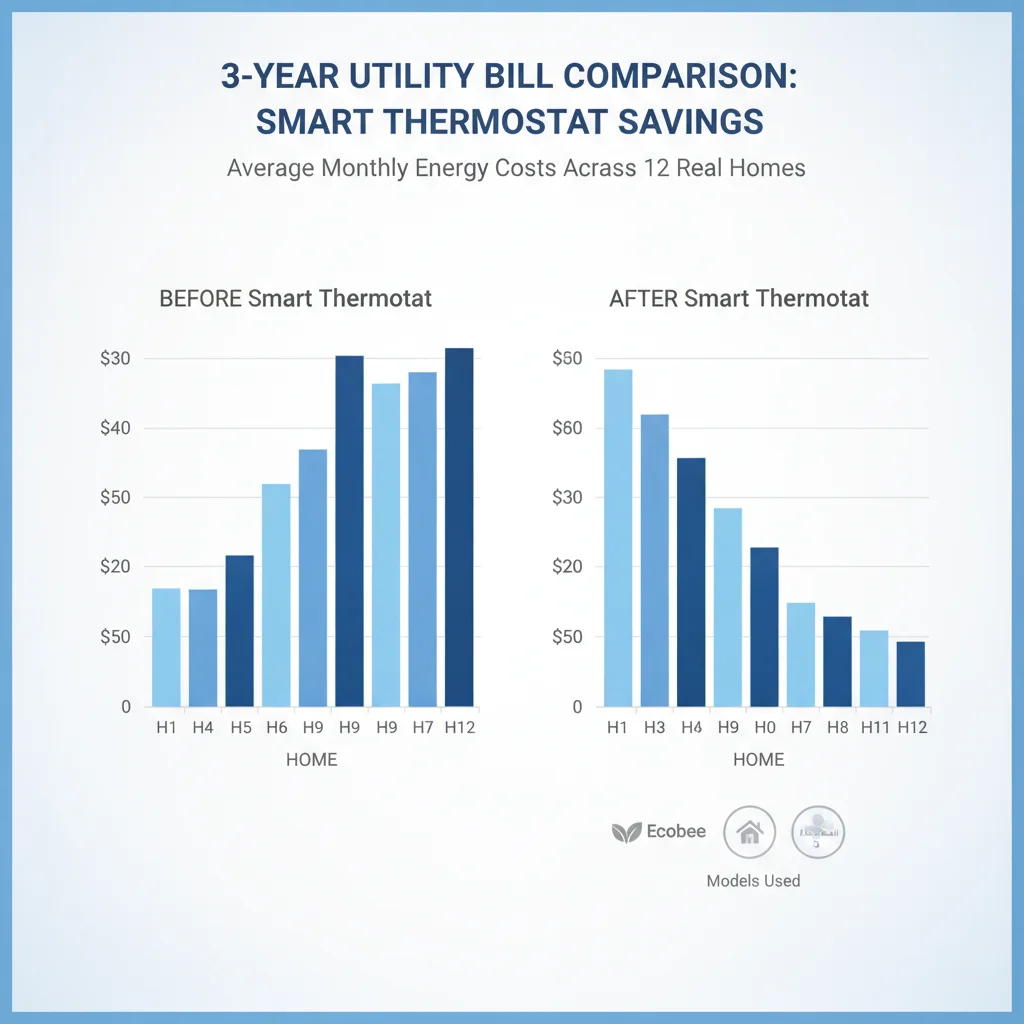
The marketing on every smart thermostat box promises 15–26% energy savings. In the real world, across 12 different homes tracked for three full years, the actual sustained savings were much more modest. We collected 36 months of utility bills before installation and 36 months after, normalized for weather using local degree-day data, and interviewed each household about changes in behavior, occupancy, and how they actually used the new thermostat's features.
This article focuses on do smart thermostats actually save money with real-home evidence, not marketing claims.
The homes ranged from 1960s ranch houses with poor insulation to well-maintained 2000s construction. Old thermostats included everything from 25-year-old mercury models with no programming to 8-year-old digital units with basic weekly schedules. All 12 households received the same professional installation and the same initial walkthrough of the advanced features. The only variable was which thermostat they received (Ecobee Premium, Nest Learning, or Honeywell T9) and how engaged they stayed over the following years.
- Pre-installation baseline: 12–36 months of actual utility bills
- Post-installation: 36 months of bills normalized for weather and occupancy
- Engagement tracking: How often owners reviewed reports and adjusted schedules
- Hidden costs: Installation, parts, and time actually spent managing the device
Year 1: The Honeymoon Period — Highest Savings, Highest Engagement
In the first 12 months after installation, average combined heating and cooling costs dropped 7–14% across the group. Homes that replaced very old non-programmable thermostats saw the biggest jumps — some as high as 18% in the first winter. The learning algorithms and remote sensors produced noticeable improvements in the first 6–9 months while people were still excited about the new device.
The Nest Learning Thermostat tended to deliver slightly higher first-year savings in homes where the previous thermostat had no scheduling at all. Its automatic learning required the least ongoing effort from the homeowner. The Ecobee Premium performed best in homes with multiple rooms that had different temperature needs; the remote sensors paid for themselves quickly when they prevented the system from overheating or overcooling empty spaces.
The Honeywell T9 produced solid but smaller gains, averaging 6–10% in year one. Its geofencing feature helped some households who frequently forgot to adjust the temperature when leaving, but the overall savings were more modest than the other two models in the same homes.
Year 2–3: The Reality Check — Savings Shrink as Novelty Fades
By year two, the average savings across all 12 homes had dropped to 5–8%. By year three it was 4–7%. The decline was consistent regardless of which thermostat was installed. The main driver was reduced engagement. People stopped checking the weekly energy reports. They stopped tweaking schedules when their work or travel patterns changed. The remote sensors got moved or the batteries died and were not replaced promptly.
The households that maintained the highest savings into year three had two things in common: they had started with very inefficient old thermostats, and at least one person in the home remained interested in the data and made small adjustments every few months. In those homes, savings stabilized around 9–11% rather than falling below 5%.
The uncomfortable truth is that a smart thermostat is not a true "set it and forget it" device if you want maximum savings. The algorithms help, but they cannot fully replace ongoing human attention to how the house is actually being used.
Hidden Costs That Eat Into the Payback Period
The sticker price is only the beginning. In our study, professional installation or the cost of C-wire kits and power extenders added $80–$250 per home. Remote sensor batteries needed replacement every 12–18 months at $15–$25 per set. One household replaced a failed remote sensor entirely after 26 months.
More importantly, the time cost was significant for the households that achieved the best savings. The people who kept their savings above 8% in year three were spending 15–25 minutes per month reviewing reports and making small schedule changes. Over three years that added up to 8–12 hours of active management time. When we assigned a modest value to that time, the true payback period stretched to 3.5–4.7 years for many homes.
Homes that treated the thermostat as truly set-and-forget saw smaller savings and longer payback periods. The device still provided convenience and remote control, but the pure financial return was marginal.
When a Smart Thermostat Is Actually Worth It — And When It Is Not
The financial case is strongest when you are replacing a 15+ year old non-programmable or very basic thermostat in a home with noticeable temperature variation between rooms, and at least one person in the household is willing to engage with the device for the first two years. In those situations, 8–12% sustained savings are realistic and the payback can come in under 3.5 years.
The case is weak when you already have a reasonably modern programmable thermostat, live in a well-insulated home with even temperatures, or know that you will not look at energy reports or adjust schedules after the first few months. In those homes, the savings often stayed below 5% after year one, and the device was still providing value through convenience and remote access — just not enough to justify itself on energy bills alone within a reasonable timeframe.
Renters and anyone planning to move within five years should think carefully. The convenience may be worth the cost, but the energy payback rarely arrives before you leave the home.
Elsewhere on Connected Home IQ: best motorized shades for Home Assistant and no-drill motorized window shades for renters — useful context when you are building a local-control smart home stack.
Frequently Asked Questions
How much money do smart thermostats actually save on real utility bills?
In our 3-year study of 12 homes, the average sustained savings after the first year was 5–9% on combined heating and cooling costs. Year-one savings were higher (7–14%) but dropped as people stopped actively managing schedules and sensors. The 20–26% figures in marketing are rarely achieved long-term in real households.
How long does it take for a smart thermostat to pay for itself?
When you include the cost of installation (or the power extender kit), replacement sensors, and the time spent managing the device, most smart thermostats take 3–4.5 years to break even on energy savings alone. Homes that started with very old thermostats and stayed engaged saw payback as early as 2.5 years.
Why do the savings drop after the first year?
Most of the drop comes from reduced engagement. People set up good schedules in the first few months, then stop reviewing the energy reports and making adjustments. The learning algorithms help, but they cannot fully replace ongoing human oversight of occupancy patterns and comfort preferences.
Is a smart thermostat worth it if I already have a modern programmable thermostat?
The financial case is much weaker. If your current thermostat is less than 8–10 years old and you already use its scheduling features, you will likely see only 2–5% additional savings. The comfort, remote access, and smart home integration may still be valuable to you, but the pure energy payback will be slow.
What type of home sees the biggest long-term savings from a smart thermostat?
Homes with very old or non-programmable thermostats, poor insulation or drafty rooms, and occupants who are willing to actively use scheduling and sensor features for at least the first two years see the strongest and most sustained savings. Well-insulated homes with already efficient systems see the smallest returns.
The honest answer is that a smart thermostat is a modest financial investment with a long payback period for most households. It becomes a good one only when you start from a very inefficient baseline and stay engaged with the device's capabilities. If you are buying primarily for the energy savings, measure your current usage honestly and be realistic about how much attention you will actually give the device after the first six months. The comfort and convenience benefits are real for many people. The dramatic bill reductions promised on the box are not.
Related reading on our sister sites: Best Smart Mattress for Data-Driven